

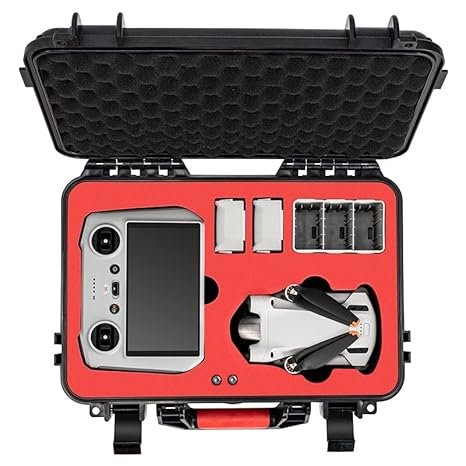
Can a waterproof shell beat a shockproof armor when your Mini 3/4 Pro meets water, rocks, or rookie mistakes—and which one could save you hundreds in repairs?
Quick comparison of two Amazon cases for the DJI Mini 3/4 Pro: a double-layer water-resistant hard shell versus a waterproof-and-shockproof hard plastic case, helping you pick the right balance of protection, internal fit, and practical field portability and travel practicality.
Waterproof Travel

Highly protective for wet or dusty conditions with a robust shell and precision EVA fitment. Best suited for pilots who prioritize waterproofing and a compact, travel-friendly case; internal organization is adequate but less flexible for extensive Fly More gear.
Shockproof Organizer

A rugged, highly organized protective case designed for pilots who carry extensive Fly More gear. Excellent shock protection and accessory organization with security features, but it trades some portability for capacity.
DJI Mini Case
DJI Mini Pro
DJI Mini Case
DJI Mini Pro
DJI Mini Case
DJI Mini Pro
Design & Build: Waterproof Seals vs Shock-Absorbing Structure
Exterior shell & rigidity
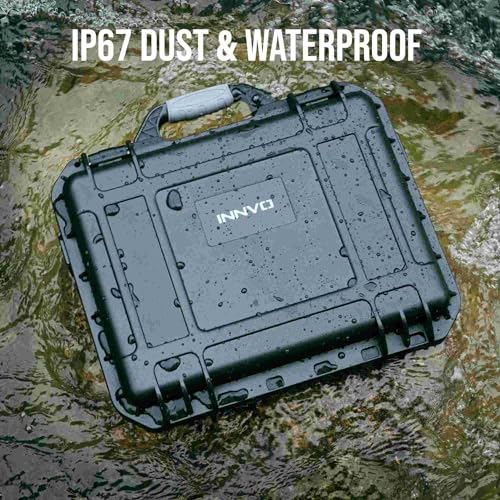
Product 1 uses a compact hard shell with a dense EVA-lined double-layer design: an outer shell for rigidity and an inner EVA layer that doubles as dust protection and light impact cushioning. Manufacturer claims IP67 water resistance and repeated watering durability; the shell reads as medium‑rigidity, optimized for a smaller footprint.
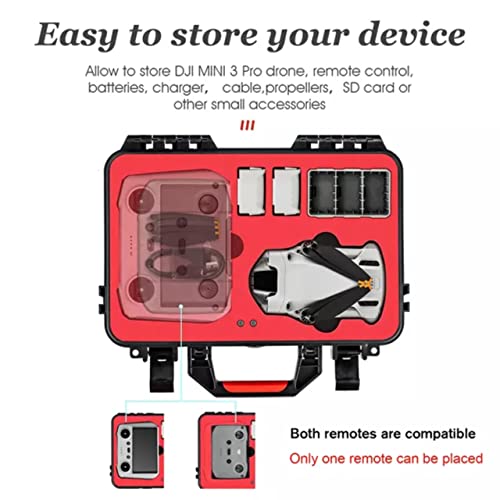
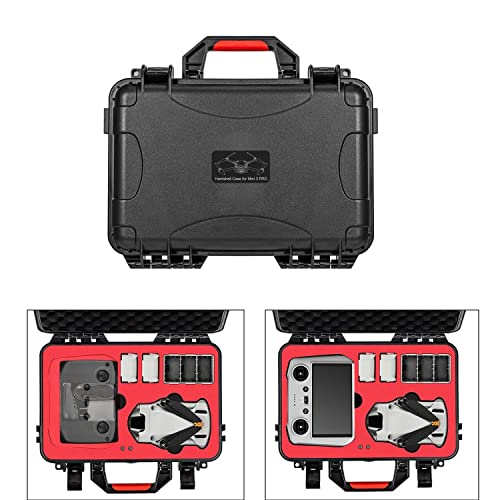
Product 2 is a single hard‑plastic shell engineered for ruggedness. It’s thicker, with an emphasis on impact resistance and organized internal cavities. Also IP67 rated, the case feels stiffer and bulkier—built to take knocks rather than save packing space.
Sealing method, latches & pressure management
Product 1 relies on precision fit and EVA lining to achieve its waterproof/dustproof claim; the listing doesn’t call out a pressure‑relief valve or lockable latch points. Latches appear serviceable but not explicitly lock-ready.
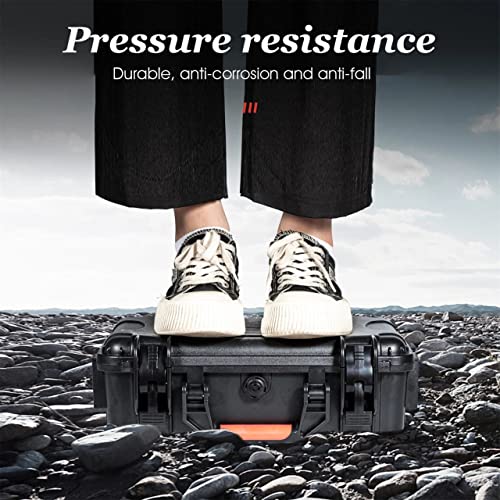
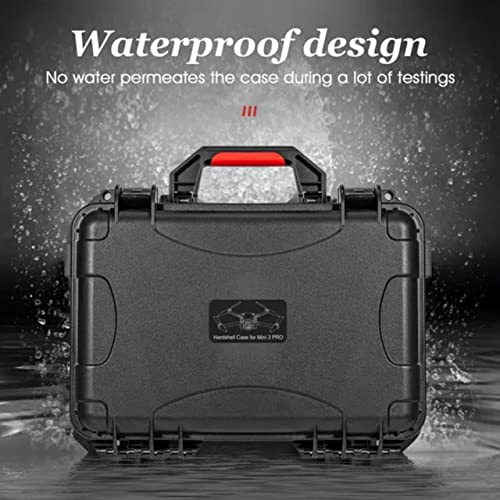
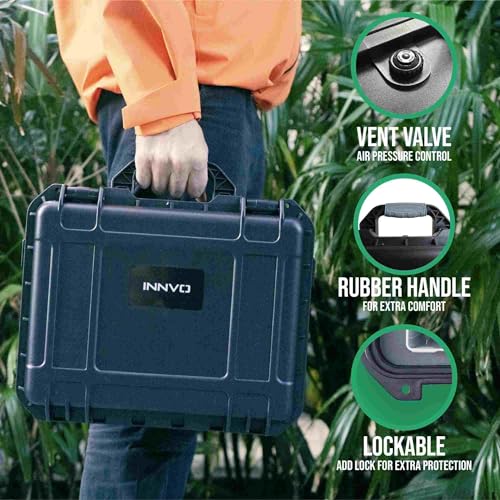
Product 2 includes a pressure relief valve and two lockable holes, plus stronger-looking pop latches—designed for secure transport and frequent opening at altitude or on boats.
Shock mitigation approach & durability
Product 1 mitigates shock with its double-layer EVA cushion—good for drops and abrasion in tight travel bags. Product 2 favors an engineered internal layout and thicker plastic walls with molded compartments (and foam-like inserts) to absorb multi‑directional impacts.
Corrosion resistance & expected lifespan
Both advertise corrosion‑resistant hardware implicitly by outdoor use claims; Product 2’s metal lock holes and pressure valve suggest longer hinge/latch life under salt or wet conditions. Product 1’s 5‑year warranty implies manufacturer confidence, but fewer external anti‑corrosion features called out.
Feature Comparison Chart
Internal Fit & Organization: What Fits the Mini 3/4 Pro Fly More Combo
Layout & capacity — Product 1 (Water Proof Hard Shell)
The Water Proof Hard Shell uses a double‑layer design: a lower compartment molded to hold the Mini 3/4 Pro and some accessories, plus an upper EVA-lined layer/space intended for flat items (tablet, small landing pad). The layout reads semi‑modular — roomy for a combo but not packed with pre-cut foam cavities for every battery or charger.
Layout & capacity — Product 2 (Hard Plastic Shockproof)
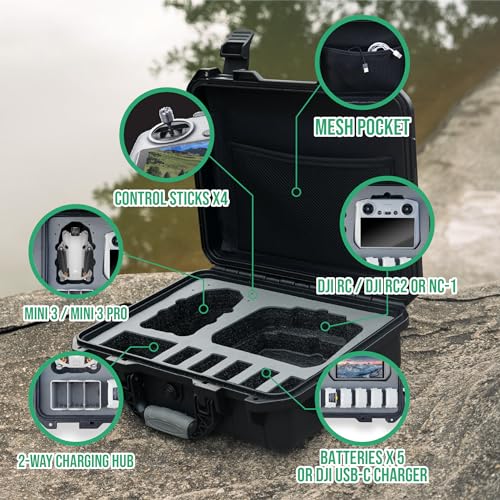
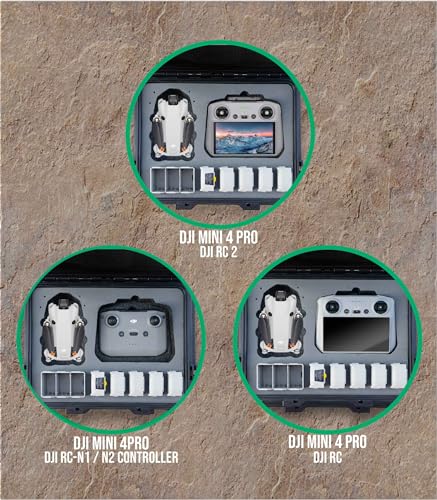
Product 2 offers a true pre-cut/configured interior with snug cavities for the drone, controller (RC, RC‑N1/RC‑2 variants supported), charger, props and multiple batteries — the listing explicitly cites capacity for a full Fly More combo and up to eight batteries. That makes it better when you need a fixed spot for every item.
What fits and how it’s organized
Ease of use and small‑item security
Product 2 wins for fast loading/unloading: dedicated foam cavities, elastic nets and a mesh pocket keep cables, SD cards and filters accessible and immobile. Product 1’s EVA upper layer and compact footprint protect gear well but demands more careful packing to prevent movement of small accessories. Foam cutouts in Product 2 better isolate gimbal/propellers; Product 1 relies on EVA cushioning and careful placement to prevent contact during transport.
Portability & Field Use: Weight, Handles, and Travel Practicalities
Weight — empty and loaded estimates
Handles, straps and grip ergonomics
Product 1: single molded handle described as “comfortable” and strong; no shoulder strap mentioned — hand carry only, so longer walks feel heavier.
Product 2: rubberized handle plus adjustable shoulder strap included, better for extended carry and hands‑free movement. The rubberized grip reduces slip on wet days and the strap mounts are robust.
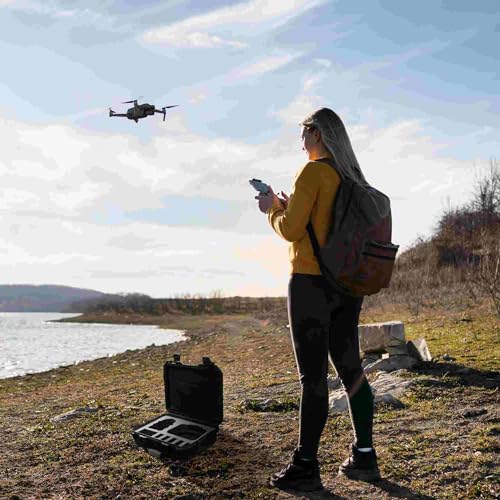
Exterior size and airline carry‑on fit
Field behavior — hikes, cars, campsites and quick access
Packing for air travel & battery safety
Value, Durability & Buyer Recommendations: Which Case for Which Pilot
Price vs features
Product 1 (≈4269 INR) delivers strong value: IP67-rated double‑layer EVA, compact footprint, and an advertised 5‑year warranty — great if you want storage without extra bulk. Product 2 typically costs more (larger, hard‑shell design) but adds a custom internal layout for the Fly More combo, mesh pocket, pressure‑relief valve and lockable holes — more features for heavier use.
Expected durability & maintenance
Product 2 (hard plastic) resists punctures, abrasion and heavy impacts better than EVA; its pressure‑relief valve and lockable holes improve long‑term integrity. Product 1’s double‑layer EVA cushions shocks and is water‑resistant but can compress over years under heavy loads.Maintain either case by rinsing with fresh water after salt exposure, keeping O‑rings/seals free of grit, letting seals dry before storage, and replacing foam inserts if they lose shape.
Warranty & customer support
Product 1 explicitly lists a 5‑year warranty — check the listing for claim process and exclusions. Product 2 doesn’t prominently advertise a long warranty on the listing; verify seller/brand support and Amazon return windows before purchase.
Buyer profiles
Quick decision rules
Trade-offs
Final Verdict
For organized travelers who need room for a tablet, landing pad and full Fly More Combo, the Water Proof Hard Shell Carry Case (Product 1) is the clearer winner — it prioritizes layout, dual-layer storage and device fit. If you regularly carry fragile gear into rough outdoor conditions where impact protection is paramount, choose the Drone Case (Product 2) for superior shock resistance and rugged protection.
Core trade-offs are storage/organization and tablet compatibility (Product 1) versus denser shockproof protection and simpler packing (Product 2). One-line recommendation: For most Mini 3/4 Pro Fly More Combo owners buy Product 1 for complete organization; buy Product 2 only if you consistently need extra impact protection. Ready to pick one? Make your choice.




Really appreciated this comparison — helped me decide between the two.
I like the double-layered waterproof hard shell because I usually bring a tablet and a landing pad on trips.
The extra dust protection was a big plus for me, plus fits the RC-N1 nicely.
Only worry is weight for long hikes, but it sounds sturdier overall.
Thanks Lisa — glad it helped! If weight is a concern, the second case is slightly lighter but trades some interior padding for that. For hikes, consider removing the landing pad from the case to save space.
FWIW I put silica gel packs in the waterproof case when flying near the coast. Cuts down on condensation worries.
I did exactly that — removed the pad and used a compression sack. Saved a bunch of weight and still felt protected.
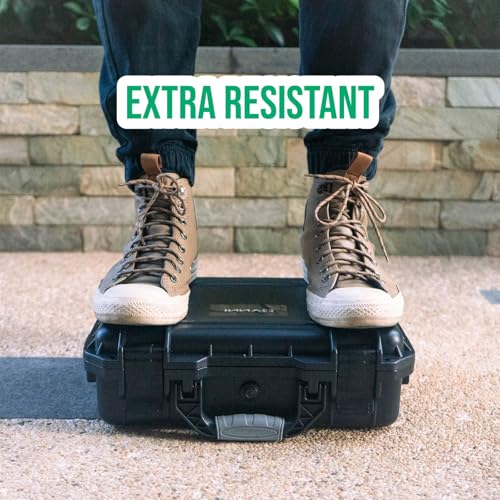
Sarcastic but honest: I used the shockproof case once as a footrest. It survived. So both are tougher than my back, apparently.
On a serious note: the black case aesthetics are cleaner for city travel, waterproof one screams “I’m going to the lake.”
Packaging and foam quality felt better on the shockproof to me.
Haha — we’ll add ‘footrest tested’ to the spec sheet. Aesthetics and foam finish are surprisingly important to users — thanks for weighing in.
LOL. Aesthetics matter when you’re meeting clients. I went shockproof for that reason too.
If anyone wants, I can add a quick comparison table of foam density/finish in an update — might help folks choosing for presentation vs. field use.
Exactly. Looks professional and still protects. Win-win.
Long weekend testing notes (sorry for the novel, but maybe useful):
1) Waterproof hard shell: Fantastic for beach mornings. No sand ingress, and I was able to clean the case easily. The double-layered storage is neat.
2) Black shockproof case: Better organization pockets, felt lighter, and the foam cutouts are intuitive for the fly more combo.
3) For camping: I preferred the shockproof one because I tend to toss gear around a bit — saves me the anxiety.
4) If you’re flying near water, go waterproof. If you’re rough with gear, go shockproof.
Both have their place.
Good note about latches. Mine is latch-based and survived a puddle fiasco. 😂
Agree 100%. For beach days I’d rather rinse the waterproof shell than scrape sand out of foam. Big win.
Design differences like foam density and wall thickness really change perceived bulk. We included weight specs in the article for that reason.
Thanks Marcus — great field notes. That matches our verdict: choose based on environment and handling style rather than a single ‘best’ label.
Also watch zipper vs latch — a latch-style waterproof case is usually more reliable long-term than a zipper with a rubber seal.
Funny thing — I thought waterproof would be bulkier, but the black shockproof felt bulkier to me because of thick foam. Depends on design.
Anyone tried mounting extra accessories (ND filters, spare props) in the waterproof case? Wondering if there’s enough room for small extras without crushing foam.
You can usually tuck thin items like ND filters into accessory pockets or thin slots if the case has them. For props, either buy a spare prop pouch or remove one foam segment to create a flat space.
I’m torn — I liked how the waterproof case claims full dust protection, but the other one mentions shockproof AND waterproof on the label (black case).
Has anyone actually dropped one from shoulder height and survived? Curious about real-world impact tests.
Also, any tips on storing batteries safely inside these cases?
Great question Jade. We didn’t do formal drop tests, but several users reported surviving shoulder-height drops with the shockproof case due to thicker internal foam. For batteries: keep them in their original sleeves or use battery-safe pouches and separate them from loose metal objects. Leave some airflow if you store them long-term and check for swelling.
Also remember to not store fully charged batteries in hot environments for long periods — both cases are fine, but temps matter more than the case type.
If you want drop proofing, consider adding a small layer of sorbothane or similar pads under the foam. Cheap mod that helps.
Dropped my Mini 3 case once (clumsy me) from about 1.2m — foam absorbed the hit, drone fine. The waterproof shell had less give but also protected from moisture. YMMV.